
What is Dyslexia?
Written by members of the Legislative Committee and Pediatric Interest Professional Affairs Committee of the New York State Association of Neuropsychology (NYSAN)
Authors: Laura Phillips, PsyD, ABPdN, Ara Nazmiyal, MPhil, EdM, MA, and Lindsay Plunkett, PhD
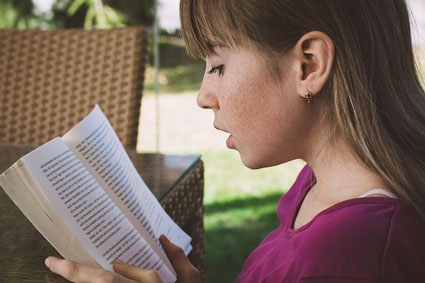 Dyslexia is a language-based learning difference that makes it harder for the brain to connect sounds with written letters and words. It is one form of a broader category called a Specific Learning Disorder (SLD) with impairment in reading. Dyslexia mainly affects word reading, spelling, and decoding skills, which then impacts comprehension as the individual is not able to read fluently, whereas other types of reading disorders may involve different challenges.
Dyslexia affects around 5%-17% of school-age children and is the most common learning disability. Dyslexia has nothing to do with intelligence, as many smart, creative, and articulate children and adults have dyslexia. In fact, individuals with dyslexia often use their reasoning and problem solving skills to work around their reading challenges. Some children can mask their reading difficulties for a while by recognizing familiar words by sight (i.e., they memorize words), using context clues, or looking at provided images. However, as schoolwork becomes more difficult and learning demands increase, such as longer reading and writing assignments, these strategies may no longer be enough. In many students, that is often when dyslexia is easier to notice. By comparison, difficulties are likely to show up earlier for children with more severe dyslexia or for those presenting with additional cognitive challenges or multiple learning differences.
Signs of (possible) dyslexia across childhood:
- Starts talking later than other children or learns new words slowly
- Struggles for longer than is typical to make certain speech sounds
- Has trouble learning nursery rhymes songs or recognizing words that rhyme
- Mixes up or mispronounces words (for example, says “renember” instead of “remember”)
- Difficulty remembering or naming letters, colors, or shapes
- Difficulty recalling specific words (e.g., says “that thing,” instead of naming objects)
- Has trouble remembering simple sequences like the ABCs, numbers, or days of the week
- Doesn’t seem to enjoy being read to or following along with books
- Difficulty recognizing and naming letters (especially those in own name)
- Difficulty matching letters with sounds (e.g., knowing that “b” makes the “buh” sound)
- Difficulty learning the alphabet song
- Difficulty rhyming, blending, or segmenting sounds (e.g., taking apart the sounds in words)
- Confusion with similar-sounding words or mispronunciation
- Difficulty writing own name or copying letters
- Avoidance of reading or writing activities
- Slow or laborious learning of letter-sound relationships
- Difficulty sounding out simple words (e.g., cat, dog)
- Difficulty remembering sight words (e.g., the, and, was)
- Difficulty spelling simple words based on the sounds they hear
- Difficulty with word retrieval and naming objects quickly
- Guesses at words rather than sounding them out
- Letter reversals or confusion (e.g., mixes up b/d, p/q), which often happens because these letters look and sound alike
- Cannot recognize many common words automatically
- Guesses words based on pictures, context, or the first letter instead of sounding them out
- Reads slowly and makes mistakes, which makes it harder to comprehend what was read
- Difficulty remembering information from what they read
- Frequent spelling errors, especially with vowels
- Spelling and writing take a lot of effort
- Avoids reading at home or expresses frustration
- Avoids reading aloud in class (asks to go to the bathroom, the nurse, etc.)
- Difficulty reading and understanding grade level material
- Reading remains slow, choppy, effortful, and/or inaccurate
- Has a harder time keeping up with reading and writing assignments
- Avoids reading aloud or answering questions that involve reading
- Written work may be incomplete or full of spelling mistakes
- Vocabulary and reading fluency are behind classmates
- Difficulty learning a new language
- Poor performance on written tests despite knowing the information
- Avoids reading-heavy subjects or assignments
- Needs extra time to read or finish written work
- Reading out loud remains slow or choppy
- May become anxious or withdrawn about schoolwork
- Difficulty learning new vocabulary or foreign languages
- Spelling continues to be a challenge; writing may be hard to organize or summarize
- May understand something if it is read aloud to them, but not if they read it to themself
- Ongoing difficulties with reading speed, accuracy, or comprehension
- Difficulty with complex written assignments or essays
- Poor spelling or frequent grammar mistakes when writing
- Avoids reading for fun or academic purposes
- Difficulty with standardized tests (especially timed reading/writing)
- May have developed compensatory strategies (memorizing, relying on context)
- Ongoing frustration, anxiety, or low self-confidence about academics and embarrassment when these challenges are noticed by peers (e.g., during text exchanges or peer-reviewed assignments)
More Questions
If you think your child might have dyslexia, there are ways to get help:
- A Psychoeducational Evaluation, usually performed by the school psychologist in your child’s school
- A Neuropsychological Evaluation, performed outside the school setting by a neuropsychologist
A school psychologist is someone who works in your child’s school and helps find out why learning is hard for some students. They do an evaluation called a Psychoeducational Evaluation, which can help teachers and parents understand how a child learns and thinks. (Please note that in some districts a special education teacher will conduct the educational portion of the Psychoeducational Evaluation.)
During the evaluation, a school psychologist will talk with your child and ask them to do different activities. These might include answering questions, solving puzzles, reading, writing, and working with numbers. The psychologist may also look at your child’s schoolwork and talk to their teachers and you.
The school psychologist will also collect information from your child’s teachers about how your child pays attention and behaves in the classroom and during other parts of the school day. This helps them understand how your child is doing in different situations at school.
The Psychoeducational Evaluation checks things like:
- How your child understands and uses words
- How they solve problems and think through new ideas
- How they remember things for a short time
- How quickly they can answer questions or finish tasks
- How well they read, write, and do math
From this evaluation, you and the school will understand more about your child’s strengths and areas where they need help. If your child qualifies, this can lead to them getting special support, services, or accommodations at school to help them learn better and feel more comfortable in school.
Importantly: While this is a great first step and can be very helpful, these evaluations are limited, such as with regard to scope of the evaluation and that the evaluation is not intended to provide a diagnosis. As such, these evaluations do not always explain why your child is having trouble learning to read.
A neuropsychologist is a doctoral-level clinician who has expertise in understanding how the brain works and how children learn. They perform a more comprehensive assessment called a Neuropsychological Evaluation, which gives detailed information about how a child’s brain works and how this affects their learning, behavior, relationships, and daily life.
Just like the school psychologist, neuropsychologists check your child’s thinking (cognitive/intellectual) and problem-solving skills, along with their reading, spelling, writing, and math. However, compared to the Psychoeducational Evaluation, the comprehensive Neuropsychological Evaluation looks at these skills in greater depth and examines many other important areas to get a complete picture of your child’s strengths and needs.
For example, neuropsychologists additionally assess:
- Attention and executive functioning skills, such as how well your child can focus, plan, organize, and manage their time.
- Verbal memory (remembering things they hear) and visual memory (remembering things they see).
- The processes involved in learning, storing, and recalling information from memory.
- Fine motor skills and handwriting, which can affect how your child writes or uses their hands for different tasks.
- Language comprehension (understanding what others say) and language expression (using words to explain ideas).
- Pragmatic language, which means how your child uses language in social situations, like having conversations or understanding jokes.
- Visual spatial processing and reasoning, which can impact tracking, organization and understanding of visual information, and learning across academic domains.
- The cognitive skills needed for learning to read, such as phonological awareness (hearing and working with sounds in words), rapid automatic naming (quickly naming objects, colors, or letters), and orthographic processing (recognizing written words and letters). These tests help show exactly what kind of reading difficulties your child has so teachers and specialists know how best to help.
Neuropsychologists also look at your child’s social, behavioral, and emotional functioning. This includes things like self-esteem, how your child feels about themself and school, and how they get along with others. They may also add a school observation when they go into your child’s classroom and observe them and their behavior in class.
By looking at all these areas, a Neuropsychological Evaluation gives a full, detailed picture of your child—not just how they learn, but also how they think, feel, and interact with others. This helps you, teachers, and doctors understand your child’s unique profile of strengths and needs. With this information, everyone can work together to create the best plan for helping your child succeed in school and to feel good about themselves.
If your child continues to struggle with reading even after getting extra help in school or private tutoring, or if progress feels slower than expected, it may be time to consider a Neuropsychological Evaluation.
Signs your child might benefit from a Neuropsychological Evaluation:
- Struggles in several school subjects or in more than one setting
- Has not made enough progress, even with extra help or intervention
- Has a medical, developmental, or neurological condition that could affect learning
- Other factors (such as attention, anxiety, or language challenges) make learning harder
Both evaluations help determine whether your child is having unexpected difficulty learning to read or understanding what they read and/or if there are other skill deficits interfering with their reading development. In this way, findings help the parent to understand their child’s academic learning profile and then advocate for the needs of their child.
Again, it is important for parents and caregivers to know that a Psychoeducational Evaluation does not give a medical diagnosis of dyslexia or other learning or neurodevelopmental disorders. Diagnosing these conditions is outside the school’s role. Instead, schools use their evaluations to determine if a student qualifies for special help in school.
Based on findings from the Psychoeducational Evaluation or the Neuropsychological Evaluation, determination will be made regarding whether your child is having unexpected difficulty learning and requires specialized supports. If so, the school psychologist or neuropsychologist will recommend special education “classification” under one of the 13 disability categories listed in the federal law called IDEA (Individuals with Disabilities Education Act). One of these categories is called Specific Learning Disability (SLD).
- If a student is classified with an SLD, it means they have difficulty with one or multiple aspects of learning that affects their progress in school.
- The classification “SLD” is a broad term and can include different types of reading problems (including dyslexia), along with writing or math difficulties.
- This classification does not mean the student has been diagnosed with dyslexia or any other medical or neurodevelopmental disorder.
If a student qualifies for a special education classification, such as SLD, they can get an Individualized Education Program (IEP). An IEP is a plan that gives the student special support, services, or accommodations to help them learn. On a child’s IEP, this classification is usually written as “a Student with a Learning Disability” or “Classification: Learning Disability.”
A classification with a Learning Disability and a diagnosis of dyslexia both help children get support for reading difficulties, but they are not the same, and each has its own benefits.
Classification with Specific Learning Disability (SLD):
- Classification with SLD can happen through the school’s evaluation process or from a Neuropsychological Evaluation.
- It allows your child to receive an Individualized Education Program (IEP) at school, which provides special support, services, or accommodations in school.
- The focus is on helping your child succeed in the academic setting, even if the exact cause of their reading difficulty is not named.
- Support is usually limited to what the school can offer.
Diagnosis of Dyslexia:
- A diagnosis of dyslexia is made by a trained professional, such as a neuropsychologist, outside the school.
- This diagnosis gives you a clear understanding of your child’s specific reading problem.
- It can help guide the most effective teaching methods, interventions, and accommodations for your child.
- A diagnosis may help you access services in school and outside of school, such as private tutoring, therapy, or community programs.
- Having a diagnosis can also help your child qualify for support later on, such as on standardized tests and in college.
Below is a comprehensive list of references and resources about dyslexia, dyslexia identification, and how to access supports for your child in school. These include websites, books, and multilingual resources.
Websites
General Information & Support
- Understood.org - Offers clear information, resources, and community support for learning and attention issues, including dyslexia. Available in English and Spanish.
- International Dyslexia Association (IDA) - Provides research-based information, fact sheets, and guidance on dyslexia identification and support.
- Reading Rockets - Practical resources for parents and educators about reading difficulties and dyslexia. Includes Spanish resources.
- LD Online - Information, articles, and resources about learning disabilities, including dyslexia.
- National Center for Learning Disabilities (NCLD) - Advocacy resources and guides on learning disabilities and how to access supports in school.
- Decoding Dyslexia - Grassroots movement with state chapters providing advocacy and resources.
- Advocates for Children of New York - Resources and direct assistance for families navigating special education and school supports (English and Spanish).
- Wrightslaw - Legal information about special education law, IEPs, and advocacy.
- Dyslexia Help at the University of Michigan - Information for families and educators about dyslexia and intervention.
- The Yale Center for Dyslexia & Creativity - Research, advocacy, and resources for families.
How to Access Support in School
- Parent Training and Information Centers (PTI) - Find local centers that help families understand special education rights and supports (English and Spanish).
- U.S. Department of Education: Office of Special Education Programs (OSEP) - Official information about IDEA, IEPs, and special education rights.
Multilingual Resources
- Colorín Colorado - Bilingual resources for families of English Language Learners, including information on reading difficulties and dyslexia (English and Spanish).
- Understood.org (en español) - Spanish-language version of Understood.org. Information on learning and attention issues, including dyslexia, evaluations, and school supports.
- International Dyslexia Association (IDA) Fact Sheets in Multiple Languages - Fact sheets about dyslexia and related topics available in Spanish, Chinese, French, and other languages.
- National Center on Improving Literacy (NCIL) - Family resources and guides about literacy and dyslexia available in Spanish and English. Includes downloadable guides and videos.
- Dyslexia International - Global organization offering resources and training in multiple languages, including French, Spanish, and Arabic.
- Advocates for Children of New York - Resources and guides for families navigating special education, available in English, Spanish, Chinese, Russian, Bengali, and Haitian Creole.
- Center for Parent Information and Resources (CPIR) - Extensive library of special education resources in over 20 languages.
Tip: If you need help finding additional resources in your language, you can also ask your child’s school, local library, or a community organization. Many websites also have translation tools or downloadable guides in different languages.
Books
- Overcoming Dyslexia by Sally Shaywitz - Comprehensive guide for parents and educators about dyslexia identification and intervention.
- The Dyslexia Empowerment Plan by Ben Foss - Practical advice and advocacy tips for parents.
- The Everything Parent’s Guide to Children with Dyslexia by Abigail Marshall - Easy-to-read resource for parents new to dyslexia.
- Wrightslaw: From Emotions to Advocacy by Peter W. Wright and Pamela Darr Wright - Step-by-step guide for parents on how to advocate for their child’s education
- Essentials of Assessing, Preventing, and Overcoming Reading Difficulties (Essentials of Psychological Assessment) 1st Edition by David A. Kilpatrick - Practical guide that helps parents and teachers understand how reading difficulties are assessed and supported.